Key points
- A Journey Of Dignity And Renewed Hope
- Rehabilitation And Livelihood Support Under The SMILE Scheme
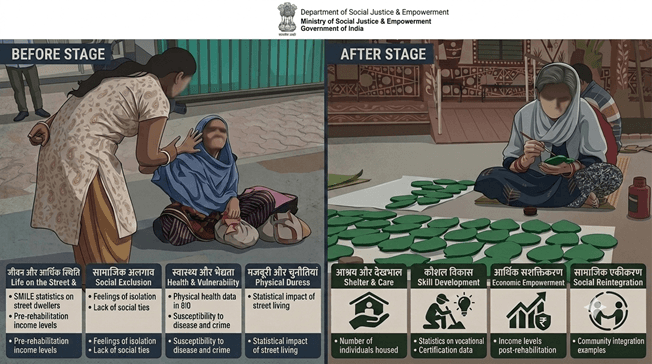
At 46, Meera Thakur (name changed) could transform her life from one marked by homelessness, illness and uncertainty to one defined by confidence, dignity and self-reliance. This could become possible by the strong support and encouragement through great initiative.
Her journey reflects the role of comprehensive rehabilitation and livelihood support under the SMILE (Support for Marginalised Individuals for Livelihood and Enterprise) Scheme of the Ministry of Social Justice and Empowerment.
A Class XI pass who had previously worked in flower garland making and catering assistance, Meera faced serious personal and financial difficulties following a breakdown in her family life. With limited support, she moved between places in search of shelter and employment.
After losing her savings and essential documents, she fell seriously ill, lost her livelihood and eventually became homeless. With no dependable source of income, she sought alms at temples and other public places to meet her basic needs and medical expenses. Suffering from acute anaemia and extreme weakness, she required medical attention, sustained care and a safe environment in which to rebuild her life.
On 16 March 2024, Meera was rescued from the premises of the District Court Shani Mandir in Indore Madhya Pradesh by the Param Pujya Rakshak Aadinath Welfare and Educational Society (PRAWES) team and brought into the rehabilitation system. She was admitted to Aurobindo Hospital, where she received medical treatment and nutritional support for severe anaemia. She also underwent successful cataract surgeries in both eyes, helping improve her vision and overall well-being.
Under the SMILE Scheme, she received comprehensive institutional care, including safe accommodation, medical treatment, psychological counselling and sustained rehabilitation support. This secure and supportive environment helped her regain physical strength, emotional stability and trust in others.
As her health improved, Meera began participating in yoga, meditation and music therapy sessions. She also took part in a cultural programme during Ram Navami, portraying Shabri in a theatrical performance that reflected her growing confidence and willingness to engage with others. She went on to acquire skills in making carpets and door mats from old sarees, tailoring, pearl garland making, incense-stick production and crafting eco-friendly products such as cow-dung idols, diyas and havan kunds. In July 2025, she participated in a workshop organised by the National Institute of Social Defence (NISD), further strengthening her rehabilitation and skill-development journey.
Over time, Meera emerged as a responsible and respected member of the rehabilitation centre. She took on ward-management responsibilities and actively supported the well-being of fellow women residents. Today, she has moved beyond dependence on begging and is using her skills to earn a livelihood. She has taken responsibility for kitchen operations at the rehabilitation centre, independently preparing breakfast each day for approximately 50–60 beneficiaries. Her contribution reflects her culinary abilities, discipline and commitment to collective well-being.
Alongside these responsibilities, Meera participates in fairs, public markets and exhibitions to sell her handmade products, earning approximately Rs 8,000 per month. From an uncertain income of around Rs 200 per day through begging, she has progressed towards a more structured and dignified means of livelihood through handicrafts and other skills. She has regained confidence, developed leadership abilities and found new ways to contribute to the lives of others. She aspires to achieve greater financial independence, secure a stable livelihood and eventually live in an independent home with other rehabilitated women. She also hopes to use her experiences to support people facing similar hardships.
Meera’s journey demonstrates how rescue, healthcare, psychological support, vocational training and livelihood opportunities can work together to facilitate meaningful rehabilitation. Through sustained assistance under the SMILE Scheme, she has moved from vulnerability towards independence and from uncertainty towards renewed hope. Her story underscores the importance of a comprehensive rehabilitation approach that goes beyond immediate relief to help individuals rebuild their lives with dignity, confidence and opportunities for sustainable livelihood.
***
SS-152-TAR/KV/GA/RK
This report is based on the official release by the Ministry of Social Justice & Empowerment, issued through the Press Information Bureau, Government of India (28 OCT 2026 6:14PM by PIB Delhi). Read the original: From The Streets To Self-Reliance.
How we verified this
VerifiedEvery fact, figure and quotation is taken from the official PIB release (Release ID 2329672) issued by the Ministry of Social Justice & Empowerment on 28 OCT 2026 6:14PM by PIB Delhi; checked against the source on 28 Oct 2026. Headline and summary written by BDT from that release.
Sources
- 1.From The Streets To Self-Reliance — Press Information Bureau, Government of India