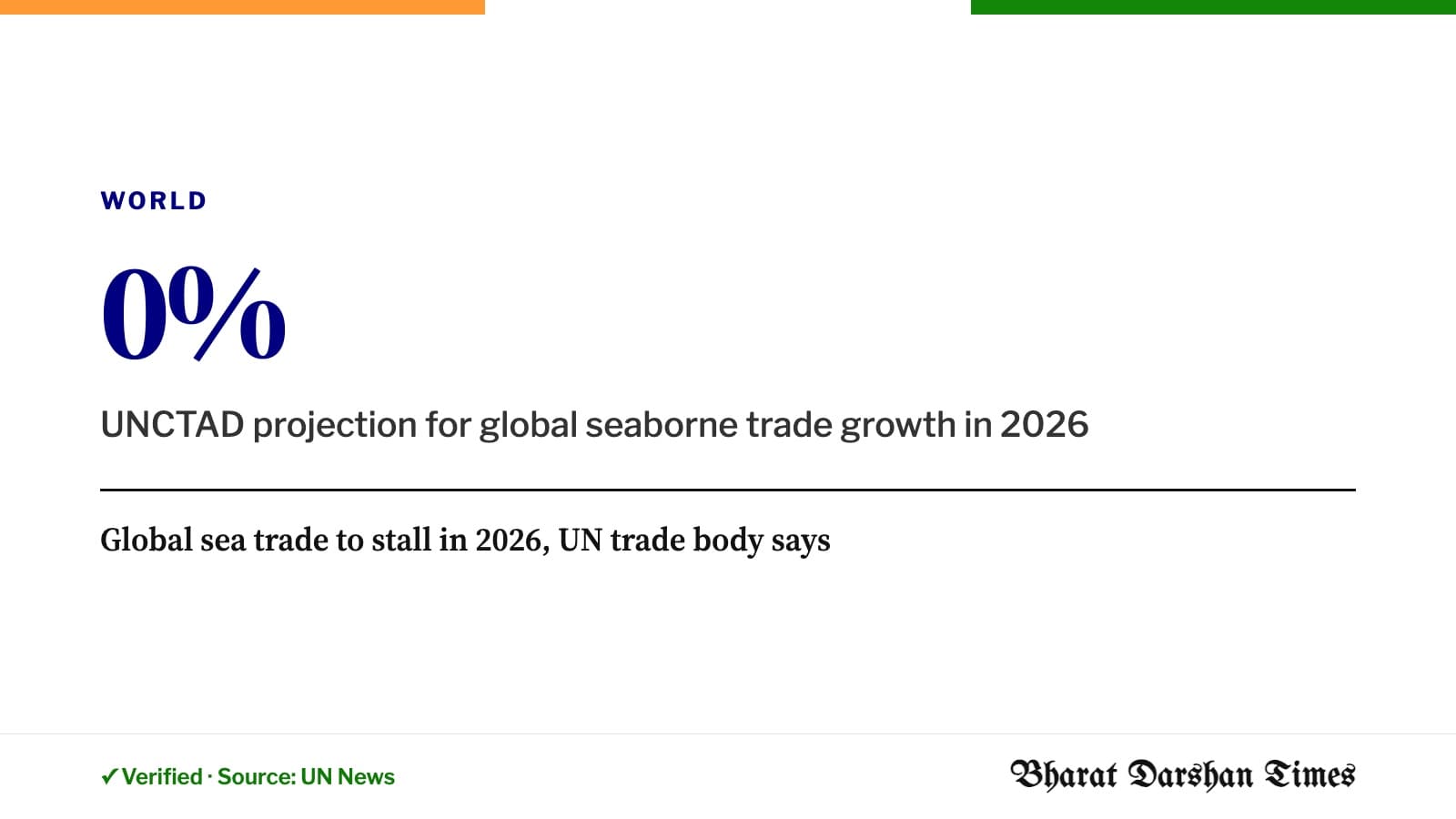
Seaborne trade, which carries more than 80% of the goods the world buys and sells, will not grow at all in 2026, the UN's trade and development agency projects, as four critical shipping chokepoints come under pressure at the same time.
UN Trade and Development (UNCTAD) said on 26 November that ships carried 12.3 billion tonnes of goods in 2025, but growth slowed to 1.9% — half the pace of 2024. It expects zero growth this year, followed by a recovery of 3.2% in 2027.
Four chokepoints at once
The Strait of Hormuz, the Red Sea, the Black Sea and the Panama Canal are all under strain, UNCTAD said. According to UN News, attacks on shipping linked to the Iran-US war created a near-standstill in oil and gas flows through Hormuz.
War-risk insurance for a $100-million tanker reportedly jumped within days from about $200,000 to $1 million per voyage, and container lines added emergency war-risk and fuel surcharges.
Ships are being rerouted, so goods keep moving, but on longer voyages: trade volumes are expected to be flat this year while miles travelled rise 1.5%.
Who pays
"When shipping costs rise, consumers ultimately pay the price: but not everybody pays it equally," said UNCTAD Acting Secretary-General Pedro Manuel Moreno. "Small island economies and least developed countries are particularly exposed," he said, because their imports often need several shipping connections.
If the fuel shock lasts into 2027, higher shipping costs alone could push consumer prices in least developed countries up by almost twice the global average, the agency's annual Review of Maritime Transport warns.
Some good news
"South-South" container routes linking Asia, Africa, the Middle East and Latin America grew 12.1% last year, accounting for nearly a third of growth in container trade. Over two decades, least developed countries have improved their shipping connectivity three times faster than the rest of the world.
What UNCTAD recommends
Shared stocks of staple foods and fuel, and pre-agreed alternative trade routes and customs procedures, so essential goods keep moving when a corridor is disrupted.
How we verified this
VerifiedEvery figure and quote is taken from the UN News report of 26 Nov 2026 on UNCTAD’s Review of Maritime Transport. Nothing is added from other sources. Story written by BDT.
Sources
- 1.Maritime trade stagnates amid geopolitical uncertainty — UN News (United Nations)