Gamma-ray detectors at India's Arctic and Antarctic research stations have picked up the signature of a rare solar storm, showing a cheaper way to track extreme space weather from the ground.
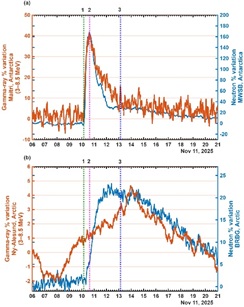
Scientists at the Indian Institute of Geomagnetism (IIG), Mumbai, an autonomous institute of the Department of Science and Technology, detected a Ground-Level Enhancement (GLE) from the solar event of 11 November 2025, designated GLE #77, the Earth Sciences Ministry said. It is the first time they have identified such a signal this way.
What a GLE is
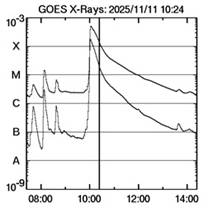
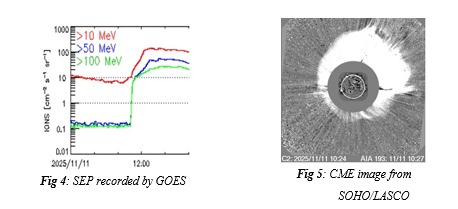
GLEs are among the most extreme solar energetic particle events. They usually follow powerful solar eruptions, when highly energetic particles, mainly protons, cross space and strike Earth's atmosphere, creating showers of secondary particles. The November 2025 event came with an intense X-class solar flare and a fast coronal mass ejection.
How it was detected
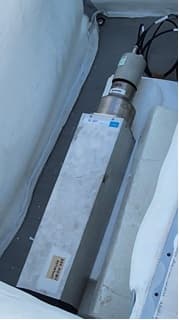
IIG installed sodium iodide scintillation detectors at Maitri in Antarctica and Ny-Ålesund in the Arctic to study cosmic rays and space weather from polar latitudes. Both recorded the GLE.
Why it matters
GLEs are conventionally tracked by neutron monitors. Gamma-ray detectors are compact and relatively cost-effective by comparison, the ministry said, and a wider network of them could complement neutron monitors and widen the geographic coverage of ground-based observation.
That, the ministry said, could improve understanding of the Sun–Earth connection and help assess the possible impact of extreme space weather.
Photos
Source: official release by the Ministry of Earth Sciences, issued through the Press Information Bureau, Government of India (26 NOV 2026 4:36PM by PIB Delhi). Read the full official text: New approach to detecting solar particle events could expand the geographic coverage of ground-based observations.
How we verified this
VerifiedEvery fact, figure and quotation is taken from the official PIB release (Release ID 2341985) issued by the Ministry of Earth Sciences on 26 NOV 2026 4:36PM by PIB Delhi; checked against the source on publication. Story written by BDT from that release; no outside facts added.
Sources
- 1.New approach to detecting solar particle events could expand the geographic coverage of ground-based observations — Press Information Bureau, Government of India