India's space economy, now valued at nearly $9 billion, can grow to $40–45 billion in less than a decade, with private companies leading the change, Union Minister Jitendra Singh said on 24 November.
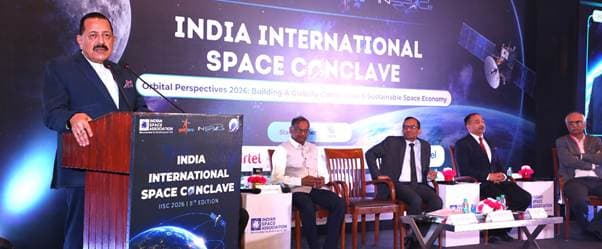
Speaking at the fifth India International Space Conclave 2026 in New Delhi, Singh said the sector has grown from single-digit startups to about 400–500 companies in a few years. The two-day conclave, on 23–24 November, was organised by the Indian Space Association (ISpA) under the theme 'Shaping the Future of Space through Innovation, Governance, Human Potential and Global Collaborations'. A report, 'Space Economy 2036: The India Blueprint', was launched at the event.
Reforms and private launches
Singh, the Minister of State (Independent Charge) for Science & Technology and Earth Sciences and Minister of State in the Prime Minister's Office, said the creation of New Space India Limited (NSIL) and IN-SPACe and the opening of the sector to private firms marked a decisive change. He cited Skyroot's maiden launch vehicle flight on 18 July 2026, its multi-mission launch agreement and its unicorn status, and said Agnikul and other companies are developing advanced propulsion, privately built rocket engines and earth-observation technologies.
Value beyond launches
The minister said the economic contribution of space technology should be measured not only by launches, satellite manufacturing and revenue but also by savings and efficiencies on the ground. Citing the PM Gati Shakti National Master Plan, he said space-based applications help improve infrastructure planning, keep projects on schedule, cut costs and reduce wastage and leakages.
Asked how to create more demand, he said the perceived lack of demand reflects limited awareness of space applications. On sovereignty and cooperation, he said they are not contradictory: India should build indigenous capabilities while staying open to mutually beneficial partnerships.
Quantum link
Singh also said India has achieved 1,000 km of secure quantum communication in three years under the National Quantum Mission, against an original target of 2,000 km over eight years. He urged domestic private players to scale up investment and industry leaders to bring in more overseas investment.
The conclave was attended by ISRO Chairman Dr V. Narayanan, IN-SPACe Chairman Dr Pawan Kumar Goenka and ISpA Director General Lt Gen Anil Kumar Bhatt (Retd).
Photos
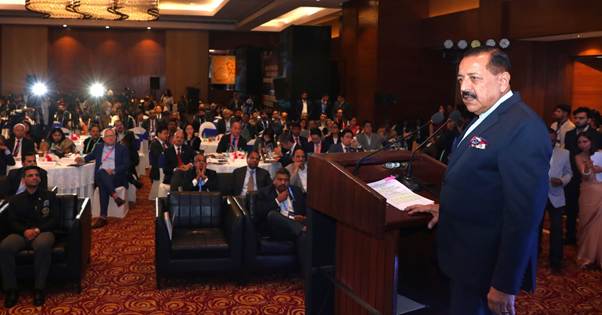
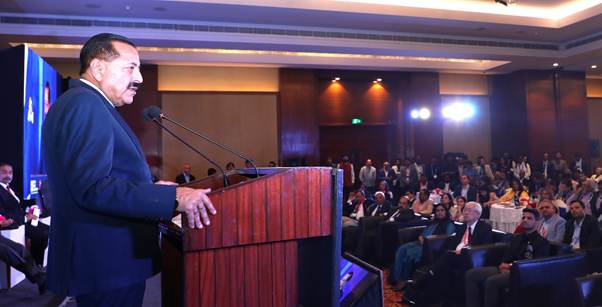
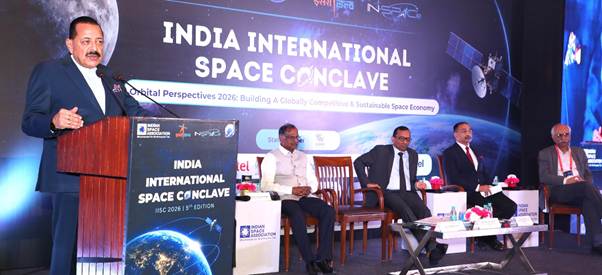
Source: official release by the Department of Space, issued through the Press Information Bureau, Government of India (24 NOV 2026 5:13PM by PIB Delhi). Read the full official text: India’s Space Economy Set for a Massive Leap to USD 40–45 billion as Private Sector Rewrites Growth Story: Dr. Jitendra Singh.
How we verified this
VerifiedEvery fact, figure and quotation is taken from the official PIB release (Release ID 2340845) issued by the Department of Space on 24 NOV 2026 5:13PM by PIB Delhi; checked against the source on publication. Story written by BDT from that release; no outside facts added.
Sources
- 1.India’s Space Economy Set for a Massive Leap to USD 40–45 billion as Private Sector Rewrites Growth Story: Dr. Jitendra Singh — Press Information Bureau, Government of India