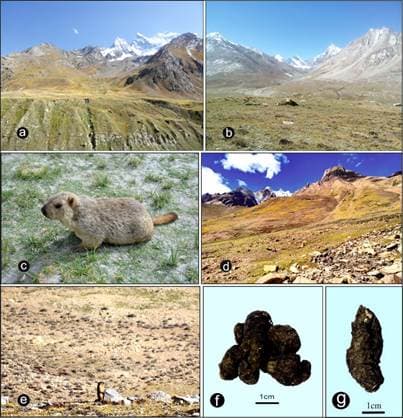
Scientists have found that droppings of the Himalayan marmot can serve as a record of vegetation and climate in the high mountains, an alternative to the lake sediments and peat that researchers usually rely on.
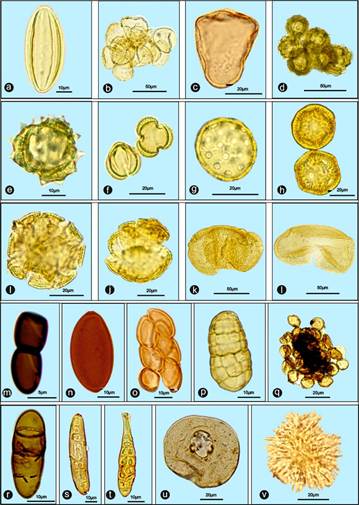
A team from the Birbal Sahni Institute of Palaeosciences, an autonomous institute of the Department of Science and Technology, studied pollen grains, fungal spores and chemical elements preserved in faeces of the marmot (Marmota himalayana). The marmot is a herbivore that lives in cold, dry alpine areas and eats local plants, so the pollen in its droppings reflects what grows around it.
What they found
Samples came from two Himalayan regions, Pensila Pass and Rimkhim. The marmots' diet was dominated by Artemisia, Asteroideae, Caryophyllaceae and Chenopodiaceae plants, which point to alpine-steppe vegetation. The team compared ratios of different pollen types and used electron microscopy with elemental analysis. They concluded the marmot could be "a strong indicator species" for tracking vegetation and climate change in the higher Himalaya, and that changes in marmot habitat can indicate shifts in altitude.
Why it matters
The method may help in remote, arid mountain areas where lake and peat records are rare. The study, published in PLOS ONE, is described as a modern reference for reconstructing past ecological change. The ministry says it could also inform conservation, including of the snow leopard, for which marmots are important prey.
Photos
Source: official release by the Ministry of Science & Technology, issued through the Press Information Bureau, Government of India (19 NOV 2026 5:01PM by PIB Delhi). Read the full official text: Himalayan marmot droppings could reveal clues about climate change.
How we verified this
VerifiedEvery fact, figure and quotation is taken from the official PIB release (Release ID 2338533) issued by the Ministry of Science & Technology on 19 NOV 2026 5:01PM by PIB Delhi; checked against the source on publication. Story written by BDT from that release; no outside facts added.
Sources
- 1.Himalayan marmot droppings could reveal clues about climate change — Press Information Bureau, Government of India