ExplainersExplainerVerified
Nine new cubs take India’s cheetah count to 62, most born here
A Botswana-born female has given birth in India for the first time; India-born cheetahs now make up nearly 70% of the population.
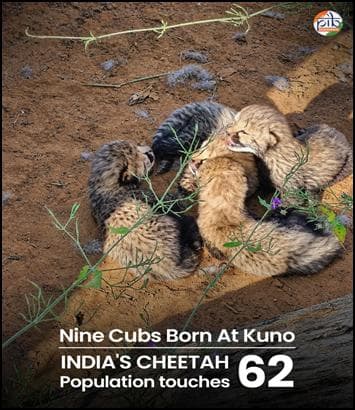
India's cheetah population has reached 62 after two litters born at Kuno National Park in October and November added nine cubs, and for the first time a cheetah brought from Botswana has given birth on Indian soil.
Of the 62 animals, 43 were born in India — nearly 70% of the total — according to a backgrounder from the Press Information Bureau. The figures suggest the project, which began with 20 imported cheetahs in 2022 and 2023, is now growing mainly through births in the country.
The two litters
- 5 October: KJP21, a 32-month-old India-born female, gave birth to five cubs. She is the third India-born female to breed, after Mukhi and KGP12. The father came from Botswana, bringing the Botswana genetic line into the India-born population.
- 20 November: KOMG 3, a 30-month-old female from Botswana, gave birth to four cubs. She is the first Botswana cheetah to give birth in India, and did so in the open after more than four months in the wild.
The November litter is only the second recorded birth in the wild — outside the fenced acclimatisation areas known as Closed Natural Areas — since the programme began in 2022.
Why it matters
The National Action Plan for Cheetah Introduction treats breeding by the first India-born generation, and breeding in the wild, as two milestones for a population that can establish itself. This autumn’s two litters at Kuno touched both.
The backgrounder is careful about what this proves. Reproduction alone "does not establish that a population is self-sustaining", it says; the action plan treats cub survival beyond one year as the more important test. The nine cubs, it says, are "an encouraging milestone rather than a final verdict".
How the project got here
- 1952: the cheetah was declared extinct in India. The last three wild cheetahs on record were shot in the Sal forests of present-day Koriya, Chhattisgarh, in December 1947.
- 17 September 2022: eight cheetahs from Namibia were released into enclosures at Kuno by the Prime Minister — described as the world's first intercontinental translocation of a large wild carnivore.
- February 2023: twelve more arrived from South Africa, completing a founder stock of 20.
- April 2025: two cheetahs, Prabash and Paavak, were moved to Gandhi Sagar Wildlife Sanctuary, the second site. Two females followed later.
- November 2025: Mukhi became the first India-born cheetah to give birth, to five cubs.
- 28 February 2026: nine cheetahs — six females and three males — arrived from Botswana.
- October 2026: Veerangana Durgavati Tiger Reserve in Sagar became the third cheetah habitat in Madhya Pradesh.
The people around the park
More than 450 "Cheetah Mitras" act as local ambassadors in 80 villages near Kuno, and the programme has created about 380 direct jobs for trackers, patrol staff and guides. Villages receive a 5% share of eco-tourism revenue. Earlier, 24 villages with 1,545 families were relocated, freeing nearly 6,258 hectares for wildlife.
Chital make up about three-quarters of recorded cheetah kills at Kuno, which also holds sambar, nilgai, chinkara, chousingha and blackbuck.
What happens next
The goal is a self-sustaining population of 60 to 70 cheetahs by 2032, spread over about 17,000 sq km of the Kuno–Gandhi Sagar landscape. The current 62 sits at the lower end of that range — but it includes very young cubs whose survival, the backgrounder notes, "cannot yet be taken for granted".
Photos
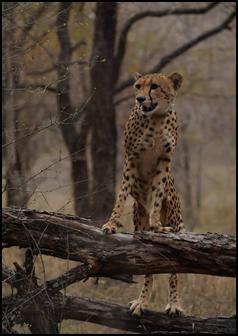
Source: official release by the PIB Backgrounder, issued through the Press Information Bureau, Government of India (26 NOV 2026 11:14AM by PIB Delhi). Read the full official text: The Return of the Spotted Sprint.
How we verified this
VerifiedEvery fact, figure and quotation is taken from the official PIB release (Release ID 2341719) issued by the PIB Backgrounder on 26 NOV 2026 11:14AM by PIB Delhi; checked against the source on publication. Story written by BDT from that release; no outside facts added.
Sources
- 1.The Return of the Spotted Sprint — Press Information Bureau, Government of India