ExplainersExplainerVerified
Small hydro explained: India taps a quarter of its 21,134 MW potential
A PIB backgrounder on the new ₹2,584.60-crore scheme aiming to add about 1,500 MW of small hydro capacity.
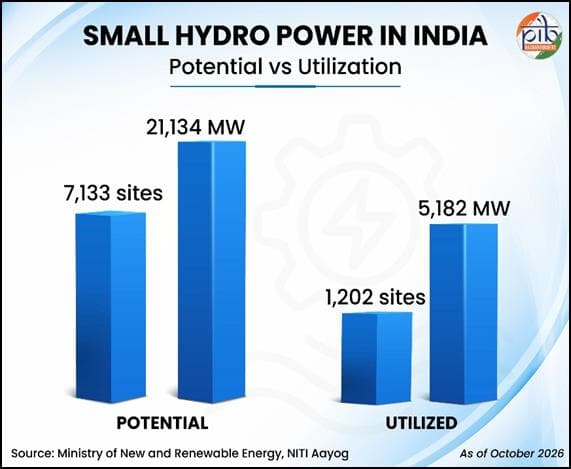
India has identified 21,134 MW of small hydropower potential across 7,133 sites, and about a quarter of it is in use, according to a PIB Backgrounder on the sector.
What counts as "small"
Small hydropower covers projects of up to 25 MW and is looked after by the Ministry of New and Renewable Energy (MNRE). Larger projects fall under the Ministry of Power. These plants suit hilly and remote areas where terrain limits larger projects and grid reach, need little land and cause minimal displacement.
How much is built
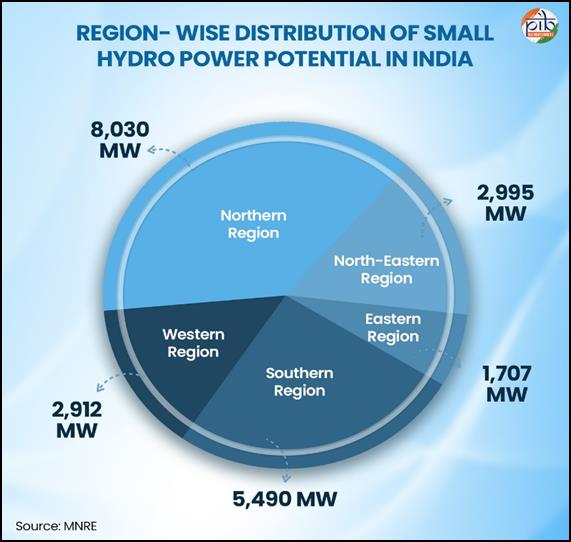
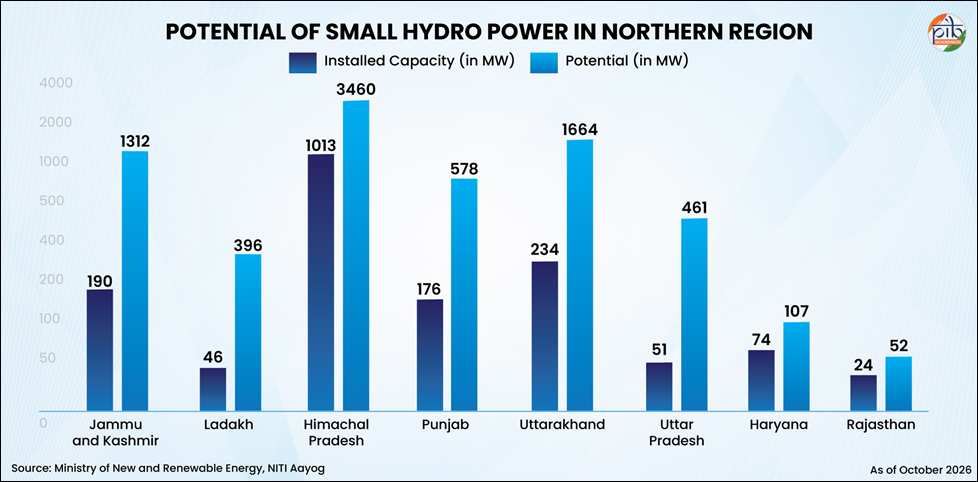
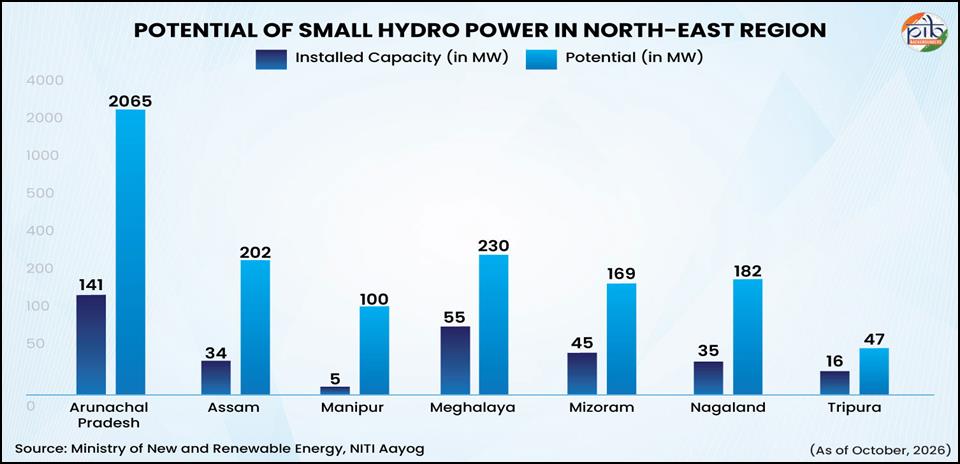
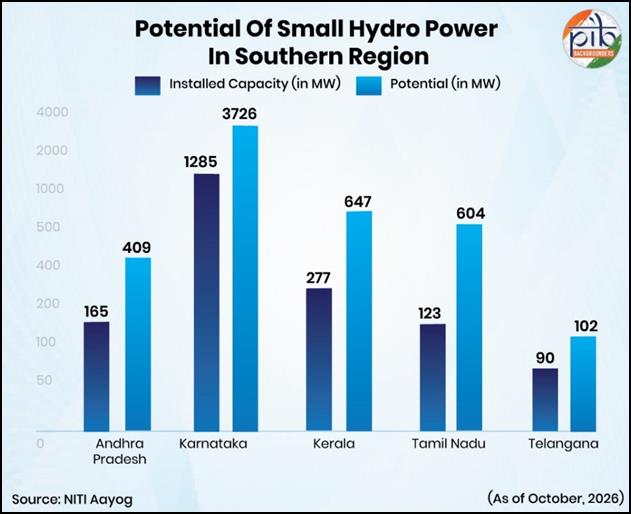
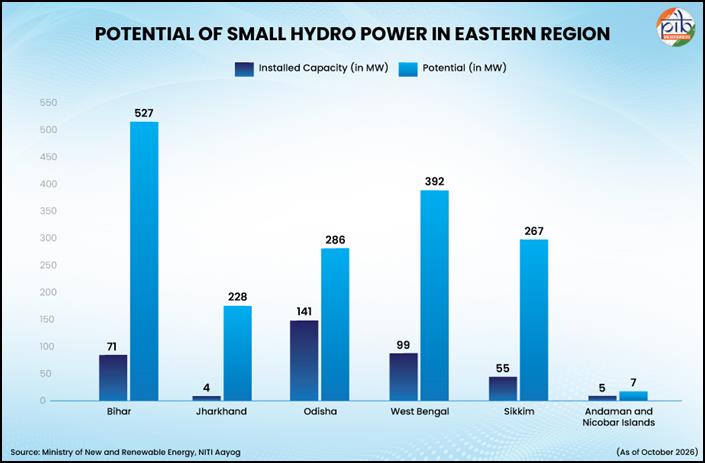
As of 30 September 2026, about 5,182 MW (around 25%) had been harnessed. That leaves 15,952 MW. By region, the identified potential is:
- Northern: 8,030 MW
- Southern: 5,490 MW
- North-Eastern: 2,995 MW
- Western: 2,912 MW
- Eastern: 1,707 MW
The new scheme
The government has approved a Small Hydro Power Development Scheme for FY 2026–27 to FY 2030–31 with an outlay of ₹2,584.60 crore. It aims to add about 1,500 MW, prioritising hilly, North-Eastern and border regions.
- North-Eastern States and international border districts: ₹3.6 crore per MW or 30% of project cost, whichever is lower, capped at ₹30 crore per project.
- Other locations: ₹2.4, 1.78 or 2.054 crore per MW, depending on size and location, or 20% of project cost, whichever is lower, capped at ₹20 crore per project.
- Investment: about ₹15,000 crore expected, with use of indigenous plant and machinery.
- Project pipeline: support for detailed project reports for at least 200 projects, with ₹30 crore set aside.
- Jobs: about 51 lakh person-days of employment during construction, plus operation and maintenance work.
Why it matters
The backgrounder says small hydro plants sit close to where power is used, which cuts transmission losses and helps voltage stability, particularly in border and hilly regions. It says they run without fuel or emissions and can support local jobs and small industries.
What happens next
The backgrounder says the Southern and Western regions are better placed for quicker implementation because of stronger infrastructure, while the Northern and North-Eastern regions hold the larger untapped resources. It describes the scheme as a way to unlock that potential through incentives, simpler procedures and more financial support.
Photos
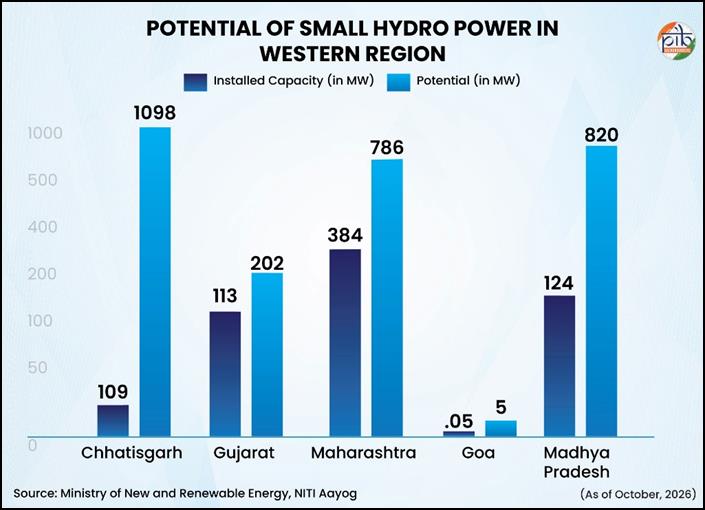
Source: official release by the PIB Backgrounder, issued through the Press Information Bureau, Government of India (22 NOV 2026 5:46PM by PIB Delhi). Read the full official text: Harnessing Small Hydro Power.
How we verified this
VerifiedEvery fact, figure and quotation is taken from the official PIB release (Release ID 2339965) issued by the PIB Backgrounder on 22 NOV 2026 5:46PM by PIB Delhi; checked against the source on publication. Story written by BDT from that release; no outside facts added.
Sources
- 1.Harnessing Small Hydro Power — Press Information Bureau, Government of India