ExplainersExplainerVerified
Biosphere reserves explained: India’s 18 sites and why they differ from parks
A PIB backgrounder for the International Day for Biosphere Reserves on 3 November.
India has 18 notified Biosphere Reserves, 13 of them recognised by UNESCO, a PIB backgrounder says ahead of the International Day for Biosphere Reserves on 3 November.
What they are
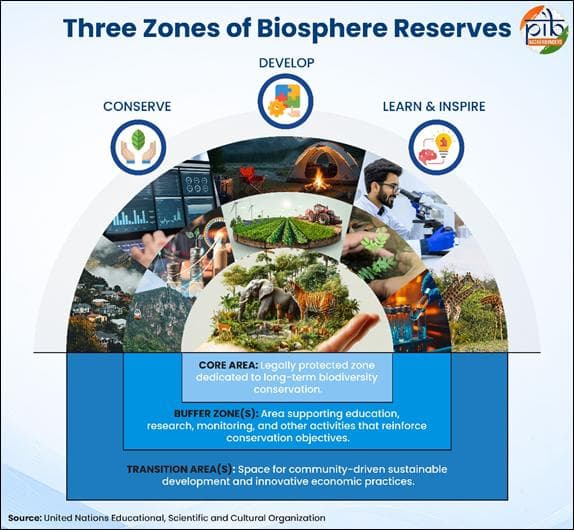
Biosphere reserves are areas identified by governments to conserve biodiversity while promoting sustainable development. Unlike national parks and wildlife sanctuaries, which mainly protect wildlife and habitats, they connect protected ecosystems with surrounding communities. UNESCO's Man and the Biosphere Programme, launched in 1971, backs this approach and treats reserves as living laboratories.
India's biodiversity
India is one of 17 mega-biodiverse countries. It has about 7–8 per cent of recorded species with only 2.4 per cent of the world's land area. The reserves range from the Western Ghats to high-altitude deserts and marine habitats.
Why it matters
The ministry says reserves contribute to food security, water availability, climate resilience and livelihoods, supported by research and community participation.
Photos
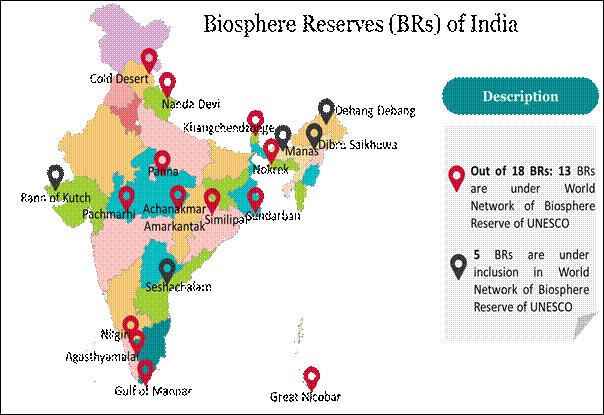



Source: official release by the PIB Backgrounder, issued through the Press Information Bureau, Government of India (02 NOV 2026 6:50PM by PIB Delhi). Read the full official text: Biosphere Reserves in India.
How we verified this
VerifiedEvery fact, figure and quotation is taken from the official PIB release (Release ID 2331747) issued by the PIB Backgrounder on 02 NOV 2026 6:50PM by PIB Delhi; checked against the source on publication. Story written by BDT from that release; no outside facts added.
Sources
- 1.Biosphere Reserves in India — Press Information Bureau, Government of India