ExplainersExplainerVerified
Pumped storage hydropower explained: the “water battery” for India’s grid
A PIB backgrounder on why 26.69 GW of pumped storage is projected by 2031-32.

Pumped storage hydropower can act like a "water battery" for India's grid, and the Central Electricity Authority projects 26.69 GW of it by 2031-32, a PIB backgrounder says.
Why storage is needed
As of September 2026, India has 308.027 GW of non-fossil installed capacity and added around 55.29 GW in 2025-26, with a target of 500 GW by 2030. Solar and wind output varies with sunlight and weather, so power must be stored when generation exceeds demand.
How it works
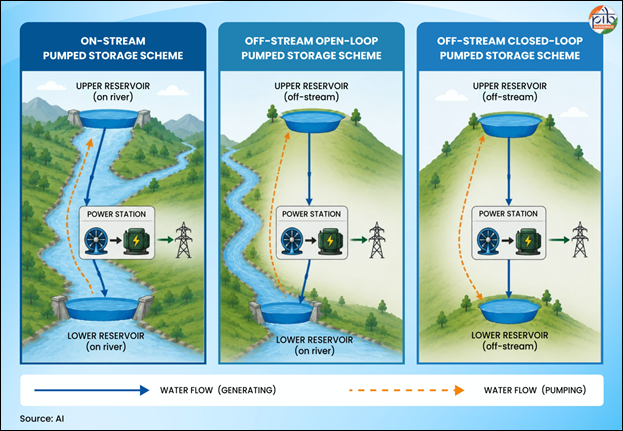
Pumped storage projects pump water to an upper reservoir when electricity is surplus and release it through turbines when demand rises, shifting renewable power across time and supporting grid stability.
Pumped storage versus batteries
The CEA projects 73.93 GW of storage by 2031-32: 26.69 GW pumped storage and 47.24 GW battery systems. Batteries respond rapidly to short-duration needs and can be deployed quickly near generation or demand. Pumped storage gives long-duration, large-scale storage but needs suitable geography, and has a long operating life.
Photos
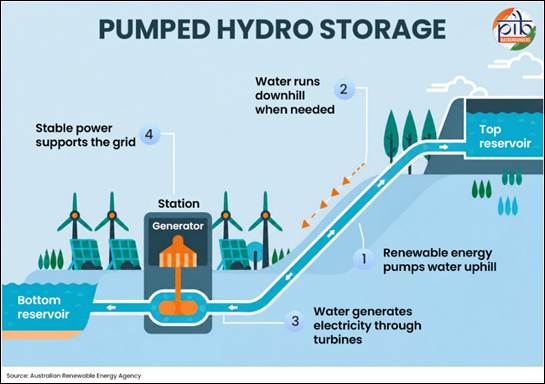
Source: official release by the PIB Backgrounder, issued through the Press Information Bureau, Government of India (02 NOV 2026 4:20PM by PIB Delhi). Read the full official text: Pumped Storage Hydropower.
How we verified this
VerifiedEvery fact, figure and quotation is taken from the official PIB release (Release ID 2331580) issued by the PIB Backgrounder on 02 NOV 2026 4:20PM by PIB Delhi; checked against the source on publication. Story written by BDT from that release; no outside facts added.
Sources
- 1.Pumped Storage Hydropower — Press Information Bureau, Government of India