ExplainersExplainerVerified
Geothermal energy explained: India’s first wells in Ladakh’s Puga Valley
A PIB backgrounder on the 1-megawatt demonstration project and the National Policy on Geothermal Energy.
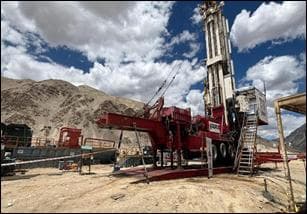
India's first two geothermal wells were commissioned in Puga Valley, Ladakh, in July 2026, a PIB backgrounder says, marking a first step towards geothermal power.
The wells
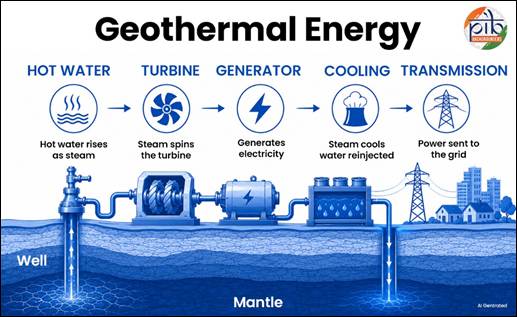
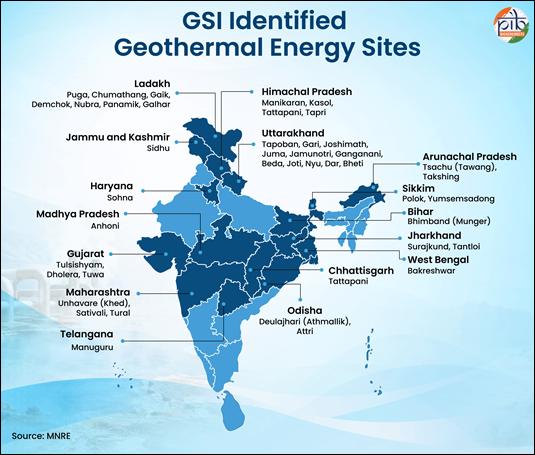
The ONGC Energy Centre commissioned the two 1,000-metre wells at over 14,000 feet. They will support reservoir evaluation and pave the way for India's first 1-megawatt demonstration geothermal power project.
Why geothermal
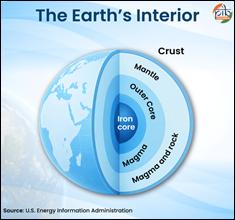
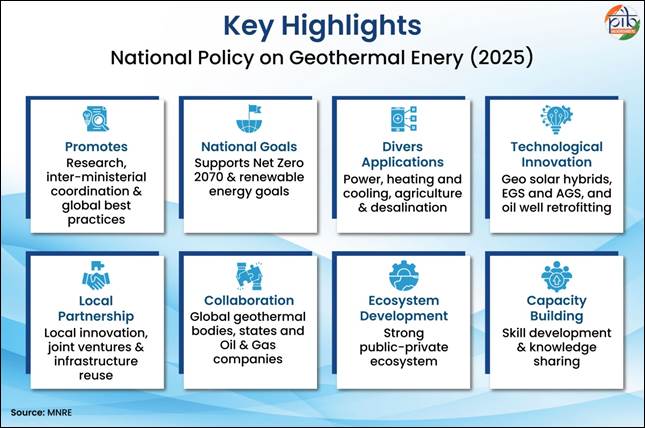
Heat from the Earth's interior is a low-carbon source available round the clock, unlike solar and wind. The government notified the National Policy on Geothermal Energy in September 2025; the Ministry of New and Renewable Energy is the nodal ministry. The policy seeks to make geothermal a key part of India's renewable mix as it works towards Net Zero by 2070.
Context
The backgrounder notes that the Bharat Renewable Energy Summit & Expo is being held in New Delhi from 2 to 5 November 2026 with participants from over 130 countries.
Photos
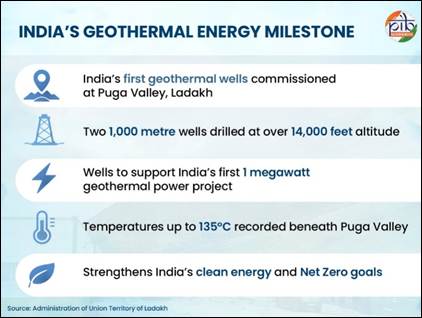

Source: official release by the PIB Backgrounder, issued through the Press Information Bureau, Government of India (02 NOV 2026 4:40PM by PIB Delhi). Read the full official text: Geothermal Energy.
How we verified this
VerifiedEvery fact, figure and quotation is taken from the official PIB release (Release ID 2331597) issued by the PIB Backgrounder on 02 NOV 2026 4:40PM by PIB Delhi; checked against the source on publication. Story written by BDT from that release; no outside facts added.
Sources
- 1.Geothermal Energy — Press Information Bureau, Government of India